Login / Register
Guest
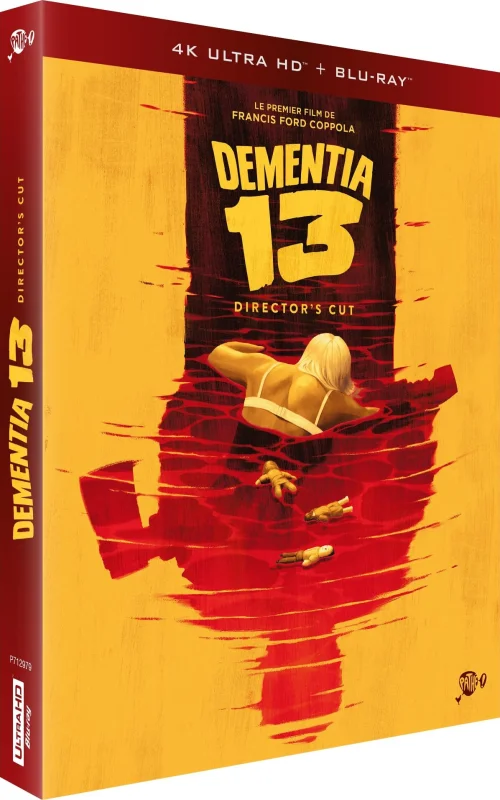
Codec: HEVC / H.265 (97.0 Mb/s)
Resolution: 4K (2160p)
Aspect ratio: 1.66:1
Original aspect ratio: 1.85:1
#English: DTS-HD Master Audio 5.1
#English: DTS-HD Master Audio 1.0
#English: DTS 2.0 (Commentary by director Francis Ford Coppola)
I won't say a word about the plot. Any mention of it would be like revealing Anthony Perkins' character in Psycho before watching the film—you have to see it for yourself.
By the way, watching this film makes Coppola's cinematic and creative preferences clear. Here are some notes in the margins:
He has always liked the theme of the extended family. This is reflected in DM13, The Godfather, and the almost autobiographical Tetro.
Coppola's DM-13 traces the biblical story of Cain and Abel. This is also reflected in The Godfather and Youth Without Youth.
Coppola had a great fondness for Irish culture. This is reflected in Finnian's Rainbow and The Godfather.
The main character in DM-13 is very similar to Laurence Olivier. This is not surprising, as Coppola considered Olivier one of the best actors in the world and invited him to play Vito Corleone in The Godfather.
One of Coppola's most subtle themes is unhappy marriages for women. In almost all of his films, there are direct or indirect references to the difficulties and conflicts of marriage—a woman must be sad and regretful (The Godfather, Youth Without Youth, Peggy Sue Got Married, Tucker, The Conversation, Tetro, The Gardens of Stone, etc.).
All these trends were already evident in DM-13. I liked the film—it's vivid, expressive, and clear. All questions are answered—there's not a single wasted minute of screen time. There are similarities to Vertigo, Rebecca, and Psycho, but despite this, the film has its own unforgettable style.
It is a genre film, but the high rating is due solely to the fact that the film is interesting to watch and concise.
 Telegram and be the first to know about updates!
 [/xfnotgiven_poster]