Login / Register
Guest
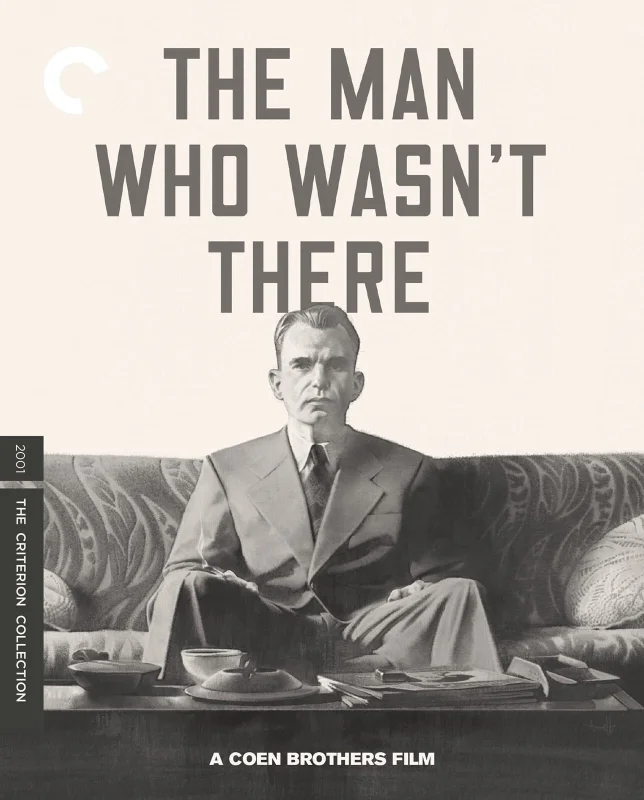
Codec: HEVC / H.265 (90.2 Mb/s)
Resolution: Native 4K (2160p)
HDR: Dolby Vision, HDR10
Aspect ratio: 1.85:1
Original aspect ratio: 1.85:1
#English: DTS-HD Master Audio 5.0 (48kHz, 24-bit)
#English: Dolby Digital 2.0 (Commentary by co-directors/co-writers/co-producers Joel and Ethan Coen, and actor Billy Bob Thornton)
Ed Crane (Billy Bob Thornton), the main character in this film, could well be called the quietest man on Earth. And this is despite the fact that he works as a barber, i.e. he constantly interacts with people. We learn more about his thoughts and attitudes towards other characters from his voiceover than from his dialogues with those around him. He can't stand chatterboxes, but he doesn't show it at all.
He goes to work regularly, then home to his wife, who is cheating on him with his employer, but he has come to terms with this fact. His life is the gray everyday life of a gray man. It is no coincidence that the film is tinted with a grayish hue.
And then one day, Ed, as he himself believes, gets a chance to break free from the captivity of everyday life: a visitor, Creighton Toliver, who positions himself as a businessman, offers our hero the opportunity to open a dry cleaner's (the story takes place in the late 1940s, and this field of business has not yet been taken over). All that is needed is $10,000—a huge sum at the time. He decides to blackmail his wife's boss.
The action is so slow-paced that some viewers, accustomed to action films, will find the movie very boring, but in fact, the plot is eventful. It's just that the Coen brothers deliberately stylize their film in this way, introducing long pauses between individual lines of dialogue or Edda's thoughts. This is done so that we can better understand the way Edda thinks, a man who is far from stupid and therefore ponders every word.
Despite the fact that The Man Who Wasn't There is a sad film, there were still moments of laughter due to the correctly placed emphasis in the phrases and pauses in the right places.
Billy Bob Thornton did a great job playing a guy who's not just quiet, but also seems unable to feel strong emotions. His emerging attitude towards Rachel Birdy (Scarlett Johansson) cannot be called infatuation, love, or admiration — it is simply his singling out of her from an endless series of others like her.
“What kind of person are you?” Frank, his colleague at the barbershop, says at the final trial, punching Ed in the face, and I admit that he has every right to do so. His behavior towards his own wife seems cruel, but in reality, he is simply a man with completely atrophied emotions. It seems that he is even calm about his own demise.
As it seemed to me, the authors of the film do not simply condemn dullness and banality, they convey the idea that many people are much worse than this very ordinary man, for example, lawyer Freddy Ridershneider or music teacher Jacques Carcanog, but they simply hide their worthlessness under a thick layer of words.
The film is pessimistic, but strangely enough, that is what makes it beautiful. The life of any person is meaningless. We fill it with meaning ourselves through chatter and emotional reactions.
 Telegram and be the first to know about updates!