Login / Register
Guest
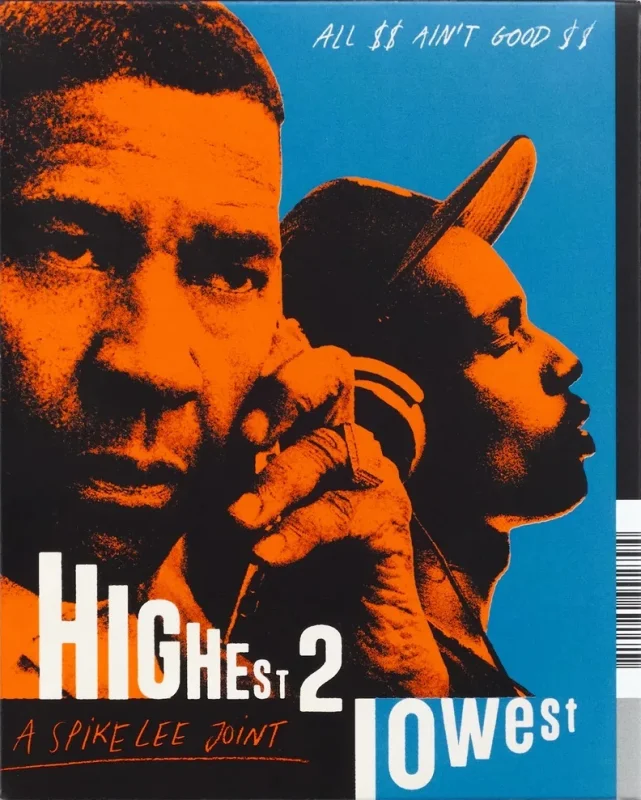
Codec: HEVC / H.265 (79.7 Mb/s)
Resolution: Native 4K (2160p)
HDR: Dolby Vision, HDR10+
Aspect ratio: 2.39:1
Original aspect ratio: 2.39:1
#English: Dolby TrueHD with Dolby Atmos 7.1 (48kHz, 24-bit)
#English: Dolby Digital Plus with Dolby Atmos 5.1
In my opinion, this film isn’t really about crime at all. The main themes established by Ed McBain and developed by Akira Kurosawa are present here only in name. The kidnapping itself isn’t particularly gripping. The moral dilemmas are touched upon only briefly.
This is a film about how a person is left alone with himself. From a psychological perspective, it’s a typical Jungian scenario in which a person finds himself face to face with his Shadow. From the very beginning of the film, we are introduced to a middle-aged, successful businessman. This self-assured man from the slums has hidden himself away in a “high castle,” cutting himself off from his past. In the film, he reminds everyone around him—but above all himself—several times that he knows how to take risks. And for good reason, since his prosperity has significantly weakened him internally. The criminal plot merely highlights these weaknesses.
However, he tries to use the trials that have befallen him as a springboard for personal growth. In just a few days, he has been overwhelmed by such deadly sins as anger, despair, and greed. And all this to realize that he has been living in the grip of his own pride for the past few years. And Spike Lee has captured these moments with great subtlety. Denzel Washington is simply magnificent in every scene of his interaction with the young rapper, who seems to reflect the dark side of his character. The actor portrays the point of no return when he realizes the entire shell of pretense that had shielded him from the outside world.
Jeffrey Wright’s role is no less complex. Unlike Denzel, he has to remain in the background most of the time. And this severely limits our understanding of his character’s inner world. But a clue from Spike Lee resolves much of this—the eye injury; is this not a hint at devastating envy? Spike Lee has included more than one biblical quote in this film, so the reference to the Sermon on the Mount is easy to read: “If your right eye causes you to sin, it is better to pluck it out and throw it away.” Wright’s character seems to be getting what he has been repressing for most of his life. Spike Lee brilliantly crafts his character—a nominally decent man who, for inexplicable reasons, comes across as a scoundrel.
And I’ve only touched on the issues that are on the surface. It’s equally interesting to consider the fact that Denzel’s character quotes James Brown, Aretha Franklin, and other stars, almost as if they were deities. He draws strength from their images, becomes inspired, and... finds himself under the sway of idols created by show business. Clearly, Spike Lee is highlighting the sublime deception in which many admirers of contemporary art find themselves. These manufactured idols—the images of pop stars—overshadow every aspect of a person’s personality with their ghostly, deceptive light.
Thus, from a dull detective film, we find ourselves in a simple parable filled with biblical references.
For me, this film will be remembered above all for Denzel’s exceptional flow and his pensive gaze inward. He watches the wild performance of the rising star with fascination and succumbs to the temptation of success. Why hide it—doesn’t he strive for sales, increased revenue, and hype... And only Denzel, perhaps, could have portrayed this inner struggle—the desire to seize success that’s so close, multiplied by an intolerance for lies.
Against the backdrop of Spike Lee’s recent lackluster films, *Highest 2 Lowest* struck me as one of the most interesting. It’s also hard to forget how subtly the film is colored by the flags of Puerto Rico and a brutal ride on New York City Subway Line 4—from the ‘Borough Hall’ station to ‘Bowling Green’ and beyond. And the next stop there is “Wall Street.” So much for “Highest 2 Lowest.”
 Telegram and be the first to know about updates!