Login / Register
Guest
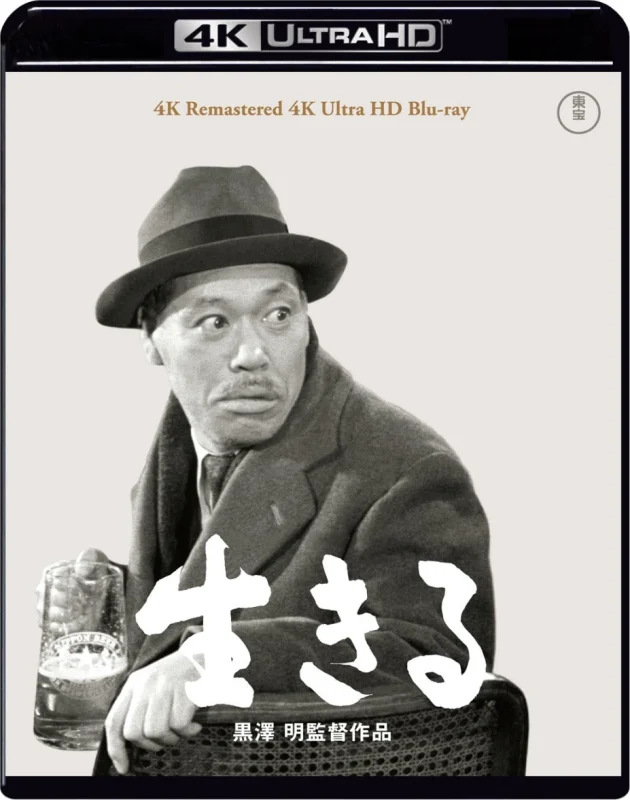
Codec: HEVC / H.265 (79.1 Mb/s)
Resolution: Native 4K (2160p)
HDR: Dolby Vision, HDR10
Original aspect ratio: 1.37:1
#Japanese: FLAC 1.0
#English: FLAC 1.0 (Commentary by film historian and author Stephen Prince)
#English: Dolby Digital 2.0 (Commentary by film critic Adrian Martin)
Having gained international recognition following the triumphant run of *Rashomon* at numerous international film festivals, its creator, Akira Kurosawa, went on to direct his most moving and heart-wrenching film, “Ikiru, in 1952. The early 1950s, in general, were a very productive time for Kurosawa: two years after “Ikiru, for example, the Master would release another masterpiece titled “Seven Samurai,” which is often recognized as “the greatest film of all time.”
The lead role in the film is played by one of Kurosawa’s favorite actors, Takashi Shimura, whom audiences could also see in “Rashomon” and “Seven Samurai.” His character is an impassive bureaucrat who holds the high-ranking position of head of the public affairs department. For 30 (!) years, Mr. Watanabe has served his agency faithfully, never once taking sick leave or a day off. One might think one could only admire this character’s work ethic and perseverance, but no, Kurosawa makes it clear from the very beginning that Shimura’s character is as pathetic as a rain-soaked worm—he has lived an empty, aimless life, devoid of human warmth and emotion, withdrawn into himself and ignoring those around him in every way (and this despite his public service!), including his loved ones. Is it any wonder that Watanabe’s colleagues are “undermining” him, planning to take his “comfortable” position soon, while his only son can’t wait for him to die, eager to get his hands on his father’s fortune as soon as possible?
The doctors’ diagnosis (stomach cancer) changes everything. Upon learning that he has only half a year left to live, Watanabe reevaluates his life and decides to devote the time he has left to doing good deeds.
Kurosawa’s directorial mastery is evident in every frame; his style is unmistakable, and yet “Ikiru” stands out among the Master’s other films primarily because of its time period. While in films like “Rashomon, “Seven Samurai,” or, say, “The Bodyguard,” the director turned to medieval Japan, here we see postwar Japan.
It’s hard to say exactly what this film is about. Is it about everyday callousness and indifference? Or perhaps about the fleeting moment of human existence? Or is it, after all, about a highly moral attempt to atone for one’s own sins? Probably all of the above. Kurosawa’s films have always been moralistic, and “Ikiru” is no exception. Do good without expecting anything in return, pay more attention to your loved ones, and cherish every day you live—that is its main message.
 Telegram and be the first to know about updates!