Login / Register
Guest
Codec: HEVC / H.265 (85.9 Mb/s)
Resolution: Native 4K (2160p)
HDR: Dolby Vision, HDR10+
Original aspect ratio: 1.85:1
#English: DTS-HD Master Audio 5.1
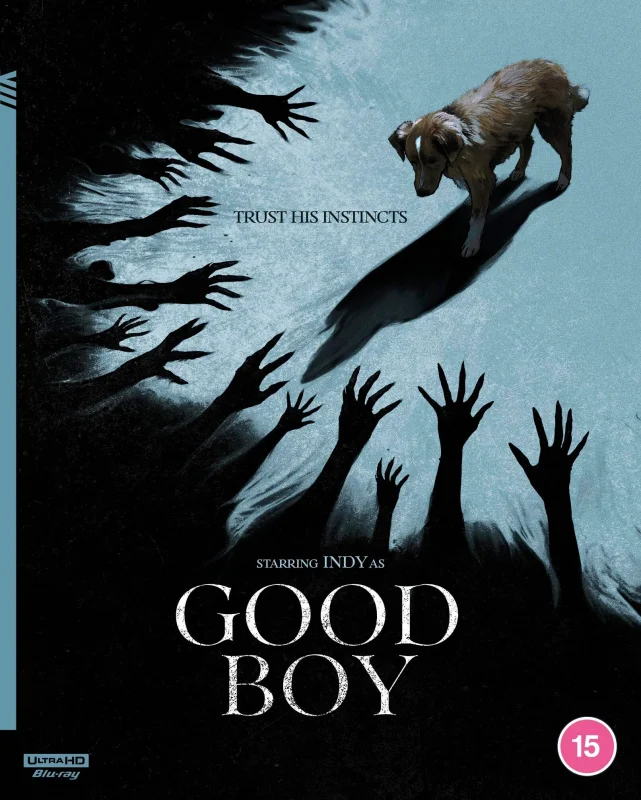
This is a rare and very touching film. After watching it, I learned that a similar concept was used in a 1985 film (this is often mentioned in reviews and analyses), but I feel that it is unfamiliar to ordinary viewers—and even more so to the generation for which this film was made.
A couple of years ago, I saw a short post on social media where someone suggested a game idea: the player controls a cat who can see ghosts and tries to protect his owners. At the time, I thought it was an interesting idea. And when the film was announced later, it immediately caught my attention—I followed it from the moment it was announced.
The plot.
The main character comes to his family's house to get a change of scenery and live there with his dog. But it soon becomes clear that strange, almost supernatural things are happening in the house. His dog begins to see things that go beyond the ordinary.
This is Ben Leonberg's directorial (cinematography, editing, and so on) debut, and for his first, almost feature-length project, the film looks confident. Visually, it is restrained: a standard house, a little forest, natural light (the limited budget makes itself felt). The cinematography is calm and simple. There are many shots from a crouching or kneeling position to show the dog's perspective, creating a sense of presence, but otherwise the filming is without any showy techniques.
The cast consists of three people, whose faces we hardly see, and Indy.
Indie is the dog who played a key role and became the main emotional axis of the project. I can't imagine any other breed, color, or expression for this role. It's amazing how perfectly the director's pet suited the role of this “bun.” Throughout the film, you can't help but be touched by how expressive he is. I want to believe that the filming went smoothly for him — and, as they say, “no animals were harmed.”
The film tries not to look like a banal horror movie. It's more of the type of project where a social or psychological theme is hidden beneath the surface. Here, the authors talk about the connection between humans and animals, about fear, acceptance, and vulnerability.
The film appeals to viewers who perceive their pets as family members. It is not the plot that is compelling, but the feelings: anxiety, tenderness, and care.
The idea that an animal can sense impending doom but not understand it is very human.
The evil here is not external. It is not a ghost or a monster, but a reflection of fear, desire, guilt, and pain. I relate to stories where evil is life itself, or how we live it.
It is impossible to call this film bad. It evokes emotions, works with mood and rhythm, and does nothing deliberately clumsy. After watching it, you are left with sadness, warm excitement, and reflection—but not irritation or disappointment.
The project was clearly made with great trepidation, love, and attention to detail.
It is simple but sincere. And thanks to all the work that went into it—both during filming and in post-production—it will be remembered as one of those films where there was a very cute dog walking down the red carpet in a bow tie and writing a letter to the film critics' academy.
 Telegram and be the first to know about updates!