Login / Register
Guest
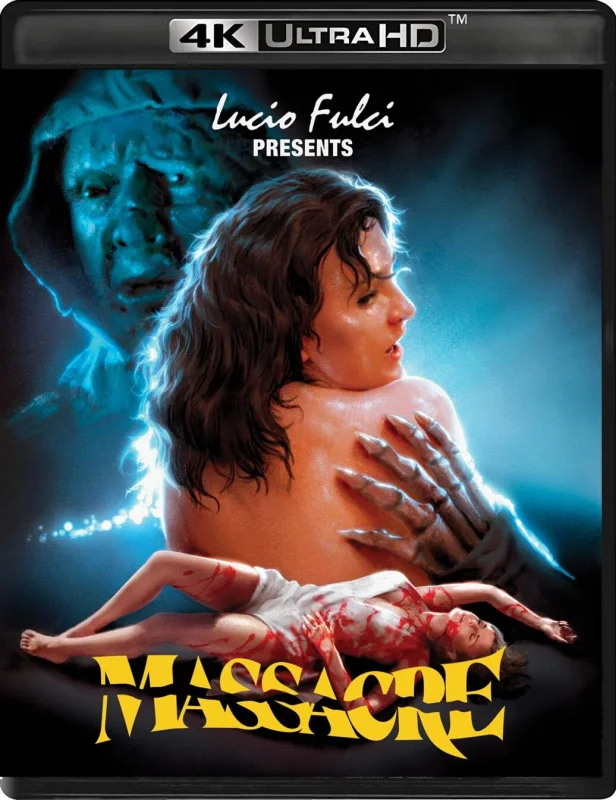
Codec: HEVC / H.265 (86.0 Mb/s)
Resolution: Native 4K (2160p)
HDR: Dolby Vision, HDR10
Aspect ratio: 1.33:1
Original aspect ratio: 1.37:1
#Italian: FLAC 1.0
#English: Dolby Digital 2.0 (Audio commentary with film historians Eugenio Ercolani and Troy Howarth)
The crisis that affected Italian cinema in the second half of the 1970s—and became particularly evident in the following decade—spilled over into the realm of spaghetti horror, among other genres. The traditions of creating outstanding horror films with elements of giallo, gothic thrillers, and other old-school Italian productions, now irrevocably lost to the past, buried any hope of their reincarnation in any other form. And while in the early 1980s some directors still tried to scare audiences with a distinctive atmosphere and an unpredictable plotline—which often yielded successful results—by the second half of the decade this had become a rare occurrence. The films that appeared were, in one way or another, carbon copies of earlier works, often combining various styles and genres.
This was also the case with the film “Massacre,” little known to many viewers, directed in 1989 by Andrea Bianchi, a director who by that time had already tried his hand at a wide variety of genres with mixed success. However, this time his professional experience and desire to bite off more than he could chew played a cruel trick on him. And even the participation of Lucio Fulci as a consulting director did not help this film become either a masterpiece (which is clearly a fantasy) or a solidly crafted middling effort. Only Signor Bianchi himself can answer why or how this turned out. If he so desires, of course.
The film’s rather sensational title, more typical of a classic American slasher, serves as an additional source of viewer interest in watching it. The opening scenes aren’t exactly shocking; rather, they leave one perplexed. On screen—genuine trash! And in the worst sense of the word. Somewhere on the level of *Mad Mutilator* and the like. After that, viewers are invited to immerse themselves in the daily grind of the film crew shooting low-budget horror films, observe the interpersonal and creative ups and downs of these people, and then participate in a séance and witness the appearance of a certain Gabo—or, simply put, an evil spirit, which subsequently possesses the body of a young Italian police sergeant tasked with hunting down a maniacal villain. Actually, that’s about all there is to say about this film. Because everything else—the acting, the cinematography, and the contrived cause-and-effect relationships between events and phenomena—doesn’t stand up to any criticism. The director simply threw all possible techniques and genres of the Italian classical school into one not-so-fresh pile and dumped it on the heads of the poor viewers. The result, to put it mildly, is not aesthetically pleasing…
However, from the perspective of run-of-the-mill cinema, of which there was plenty in the Italian film scene of that period, “Massacre” is not the worst example. And while it’s as far from a classic as China is from here, there are worse films out there. And the film industry has seen worse.
 Telegram and be the first to know about updates!