Login / Register
Guest
Codec: HEVC / H.265 (94.0 Mb/s)
Resolution: Native 4K (2160p)
Aspect ratio: 1.37:1
Original aspect ratio: 1.37:1
#Japanese: FLAC 1.0
#Japanese: FLAC 1.0
#English: Dolby Digital 1.0 (Commentary by Akira Kurosawa scholar Stephen Prince)
#English: Dolby Digital 2.0 (Commentary by Japanese-Australian filmmaker Kenta McGrath)
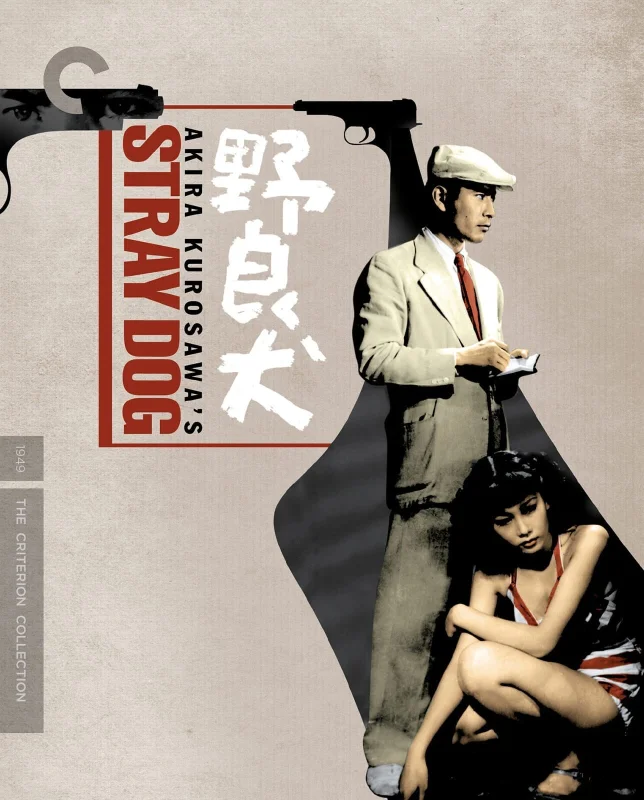
One of Kurosawa’s early films, and not entirely typical of his style. In the late 1940s, Kurosawa was experimenting with various genres in an effort to find his own voice as a director. His attempt at a psychological noir-style detective film was generally successful, but the master of Japanese cinema himself was dissatisfied, as he didn’t quite get what he had planned.
The film’s central theme lies in the life choices of two young men who found themselves in similar circumstances but made different decisions. Toshiro Mifune’s character, returning home from a lost war, was robbed on the train and left with nothing. Having weathered a personal crisis, he enrolled in the police academy to fight crime. He took full responsibility for his life, stopped blaming others for his failures, and became a man of integrity. His antagonist, finding himself in a similar situation, refused to take responsibility for his own life and became a criminal, as this allowed him to easily get what he wanted without thinking about the consequences of his actions.
The gun stolen from police officer Goro Murakami, by a twist of fate, fell into the hands of Yusa, who had turned to a life of crime. The entire film is a detective hunt for the missing gun, interspersed with a substantial dose of vignettes depicting various aspects of criminal life in mid-20th-century Japan. The film explores the fate of postwar Japan, the crisis faced by young people returning from the war, and its psychological impact on people. The film is packed with action and dialogue, and the detective investigation unfolds quite dynamically. The work is literally imbued with the idea of responsibility and the necessity of adhering to one’s life principles, which is what the protagonist, Toshiro Mifune, embodies.
Conclusion: Highly recommended for all fans of Akira Kurosawa’s work, as well as fans of the detective and film noir genres. The film is also likely to interest others, as it bears the distinct mark of Kurosawa’s talent, features a strong plot, and boasts brilliant acting.
 Telegram and be the first to know about updates!