Login / Register
Guest
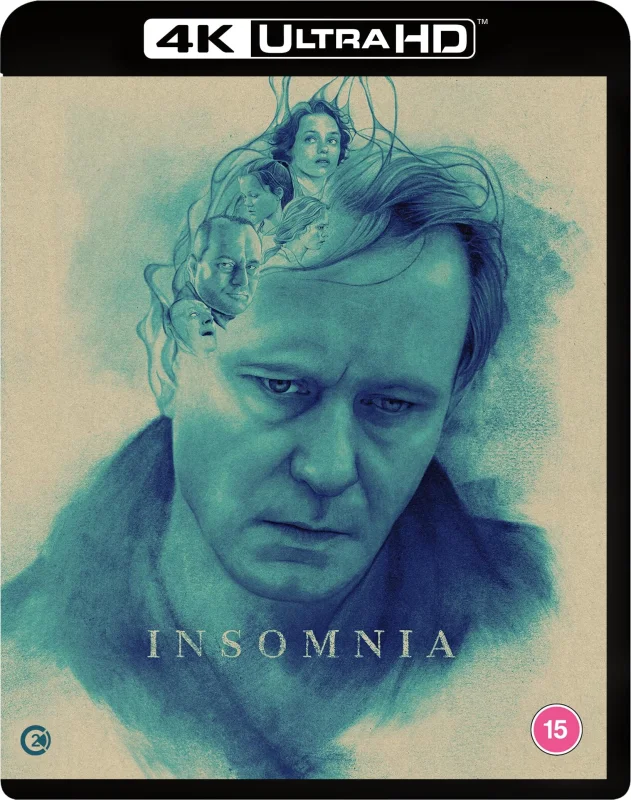
Codec: HEVC / H.265 (91.5 Mb/s)
Resolution: Native 4K (2160p)
HDR: Dolby Vision, HDR10
Aspect ratio: 1.85:1
Original aspect ratio: 1.85:1
#Norwegian: FLAC 2.0
#Norwegian: DTS-HD Master Audio 5.0
#English: Dolby Digital 2.0 (Commentary by director/co-writer Erik Skjoldbjærg and co-writer Nikolaj Frobenius)
As with any successful project—especially if it’s an American one—there’s often a predecessor that was just as skillfully made. One that was usually filmed outside of Hollywood itself. Take Nolan’s "Insomnia"—the one with Al Pacino—which was merely a remake of the 1997 Norwegian film of the same name. And the last thing I want to do in this situation is to start a debate about which version is better: in my opinion, they are both equally good and have a right to exist. So let’s just draw a few interesting parallels between these two highly worthy films.
First and foremost, it’s worth noting that the Norwegian version turned out much darker and harsher than the American one: it is, how shall I put it, as close to reality as possible—and that’s not even counting the absence of the final shootout, which Nolan omitted for reasons that are, of course, obvious. In keeping with the film’s fatalistic mood and the character of the protagonist, brilliantly portrayed by Stellan Skarsgård: a Scandinavian chill emanates from him from a mile away, and one can never be sure exactly what thoughts are swirling in his head. While Pacino’s character charmed with his elderly wisdom and genuine professionalism, Skarsgård’s hero doesn’t even try to win over the audience, presenting himself in as unflattering a light as possible.
“It’s all because of his youth,” you might say, and you’d be right to some extent: hence, we suppose, the romantic subplot between the visiting investigator and the hotel receptionist that never really took off, in which a gesture of affection transforms into a gesture of despair in a split second. Still, we’re grateful for that—in the American version, this spicy element was completely absent, and Maura Tierney’s character did nothing but dispense wise advice, just as a rather intriguing scene—from the perspective of character development—was also missing, in which Skarsgård eagerly tries to get under the skirts of the local schoolgirls.
Pangs of conscience and inner turmoil—that is the only thing that unites these characters and makes us empathize with both Aly and Stellan: their partners, accidentally shot, throw both of them off balance, and to make matters worse, there are these white nights, from which no curtains can shield them. A treacherous light seeps through every crack and penetrates the room, leaving nothing human in the soul, just as the truth is about to come out. And a terrible, oppressive insomnia rolls in, suffocating in its hopeless darkness, but one must endure and cover up the evidence, because it’s better to be Raskolnikov than some poor soul in captivity.
However, there are clearly more than one murderer in the film—whether accidental or not—and both the Swedish visitor and the one who actually stirred up this whole mess will have to spin tall tales: the only difference is that for the latter, embellishing the events is much easier and more pleasant—not only does he make a living doing it, but as a person, he is generally devoid of any kind of reflection. And if Pacino, toward the end, simply wanted to sleep it off, then Skarsgård wanted just as much to get the hell out of that godforsaken town.
 Telegram and be the first to know about updates!