Login / Register
Guest
Codec: HEVC / H.265 (75.0 Mb/s)
Resolution: Native 4K (2160p)
Aspect ratio: 1.33:1
#English: FLAC 1.0
#English: Dolby Digital 1.0 (Commentary by director/producer Barbara Kopple and supervising editor Nancy Baker)
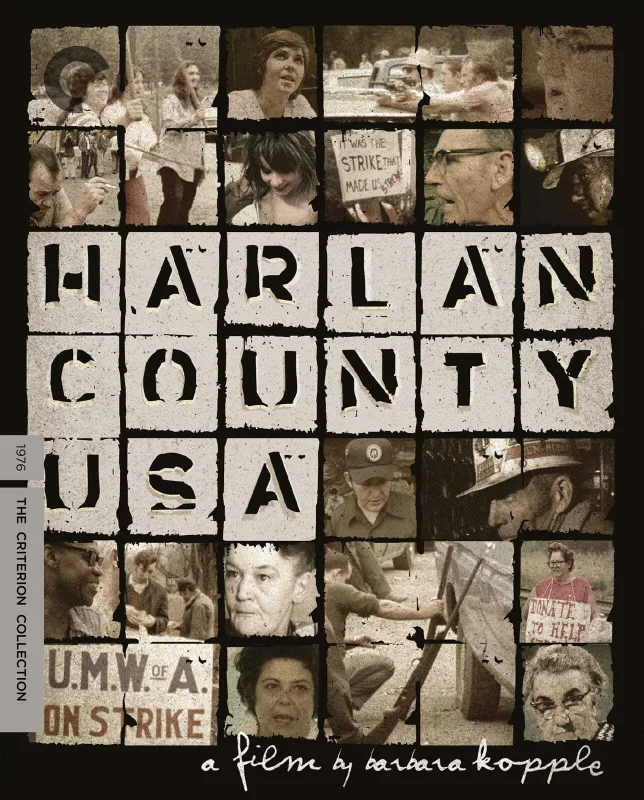
In 1972, in Harlan County, Kentucky, miners went on strike against Duke Power. They were outraged by low wages, inhumane living conditions, and the inability to reach a contract with the United Mine Workers of America (UMWA). Soon, a simple protest escalated into a local conflict between the workers, the authorities, and the company, which resulted in fatalities.
Initially, the director of this documentary, Barbara Kopple, planned to make a detailed documentary about the “Miners for Democracy” movement and its conflict with UMWA President Tony Boyle. However, Barbara soon shifted her focus to the strike in Harlan and decided to center her film on it. It was a wise choice that earned the director an Oscar for Best Documentary Feature, as the story of ordinary people is far more compelling than the political intrigues of the “bigwigs.”
“Harlan County, USA” is a surprisingly compelling film. It turns out that it’s all about the same thing: people’s desire to live in a normal, civilized world where their labor is respected and valued. Having visited many European countries, I’ve always been surprised by their residents’ reluctance to work. And this is in perfectly normal, safe, and fairly well-paying jobs. But no, they’ll stay on welfare until the very end, even as their country goes bankrupt. In the film, however, I saw people willing to risk their lives every day doing hellishly hard work, and I understand their desire to earn more, have a good pension, and get health insurance.
Interestingly, the film lacks an authorial voice—that is, there’s no voice-over narration. And I wouldn’t say that Kopple shows us only one side of the story. No, the film includes interviews with both police officers and strike breakers, as well as archival footage of speeches by Boyle and the director of “Duke Power.” However, when you hear all sorts of nonsense about how unions could pose a communist threat to the country, and how working in coal mines isn’t harmful to your health, for some reason you find yourself wanting to believe the ordinary workers. That’s the mark of a good documentary filmmaker: to make a neutral film, but to edit and shoot it in such a way that it’s obvious whose side you’re on.
 Telegram and be the first to know about updates!