Login / Register
Guest
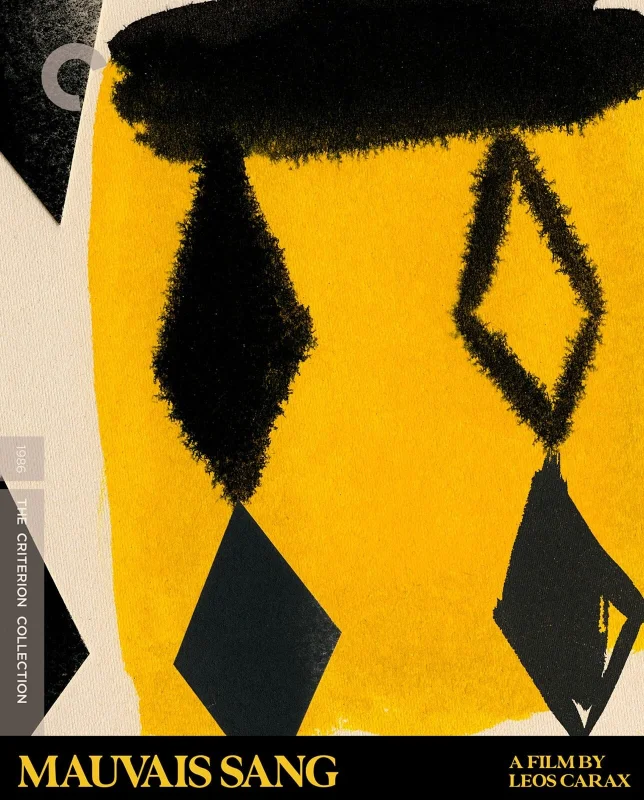
Codec: HEVC / H.265 (93.9 Mb/s)
Resolution: Native 4K (2160p)
Aspect ratio: 1.66:1
Original aspect ratio: 1.66:1
#French: FLAC 1.0
While others at age 25 are just beginning to realize their potential and learn to make conscious choices, Leo Karakas had already made a name for himself among the most discerning film buffs by that age. “Mauvais sang” is a film full of contradictions, built on a unique, expressive use of color and emotional outbursts.
Alex is the son of the late criminal Jean, and he is “an even more cunning thief” than his father. Two elderly gangsters, burdened by a massive debt to an influential female gangster, tempt the young man into a risky heist. Alex agrees, even breaking up with his girlfriend for the sake of the job, but suddenly falls in love with Anna—the young mistress of one of his partners.
At times, the film resembles Kazimir Malevich’s painting “Suprematism”—bright red objects set against an entirely gray background. Like an avant-garde artist casually applying paint to a canvas, Karakas has filled his film with red. At times, this color serves as a background that engulfs the composition, and at other times it appears in small details: a mug, roses, lipstick. Periodically, a soothing blue is juxtaposed against the aggressive red; however, it is just as “poisonous.” Green appears only at the very beginning and toward the end, symbolizing the loyalty of Alex’s ex-girlfriend. The entire picture is pieced together from colors; even the characters’ faces have red hues, as if they were Matisse portraits.
The emotional backdrop is Karakas’s second expressive device. The film alternates between slowing down, as if plunging into a sort of space-time vacuum, and literally exploding with wild expression. The characters’ sensual and unhurried conversation over dinner suddenly turns into a fight, and Alex, who had been phlegmatically smoking to a sad melody, suddenly embarks on a completely eccentric dash through the streets. This sprint scene, accompanied by David Bowie’s “Modern Love,” is the most vivid in the film, vividly illustrating the fine line between various human emotions.
Karakas brings the ideology of consumerism and love head-to-head, not so much by pitting them against each other as by attempting to restore the necessary balance. Deciding to commit a robbery for his own sake, the protagonist is ultimately willing to do it for Anna, who wants to leave as soon as possible. The love triangle in the film represents three completely different shades of love, united into a single vision and concept. Alex’s love is aggressive and passionate; the gangster Mark loves Anna somewhat distantly, yet sincerely; and Anna loves Mark with a truly gentle love, coupled with submission.
At the center of this triangle lies the object of the theft—a cure for a terrible disease that afflicts only those who “make love without love.” This futuristic concept lends the film even greater symbolism, while the fictional disease only serves to reinforce the sincerity of the characters’ feelings.
Karakas paid immense attention to the drama, particularly the transitions from unhurried to dynamic. The stunning Dénis Lavant literally comes alive in every frame, creating the wild character of Alex. The hero’s contradictions are revealed by his very nickname—“Chatterbox”—which he earned in early childhood for his silence. This young man is merely the son of a skilled gangster; bad blood runs through his veins. He has read thousands of books but knows nothing except how to play a card game similar to “thimbles” and crack safes. His character is lost in ideas and judgments sucked from books as if by a vacuum cleaner—a continuous stream of letters and punctuation marks. Only his sincere love for Anna brings him back to his senses, opening his eyes and making things clear. While at the beginning of the film many elements of the set design—and even the characters—are out of focus, by the time the credits roll, the picture becomes absolutely sharp and clear. The unrequited nature of his feelings clears Alex’s mind, allowing him to put himself in the shoes of his ex-girlfriend Lisa, who is ready to follow her boyfriend to the ends of the earth.
Anna, played by Juliette Binoche, appears in a somewhat different light. Her character is like a spring that coils throughout the entire film, only to snap open at the most unexpected moment. The fine line between the red sofa and Anna’s blue blouse—emphasized in one of the scenes—symbolizes a certain restraint in this demure young woman, who finds herself in an emotional maelstrom and realizes the futility of trying to shield herself from men’s gazes. Throughout the film, Binoche’s character appears in three solid-colored outfits: red, blue, and black—the director wordlessly conveys the heroine’s inner state to the viewer.
And finally, Mark—a cowardly thug, terrified of the influential “American woman” who has already killed Alex’s father over those same debts. But over time, a cauldron of unbridled emotions begins to boil within him as well, meant to snap his fear like a matchstick, revealing its utter groundlessness and true nature.
Conclusion: A film of aggressive splashes of color against gray and black backdrops, deep existential dialogues, abruptly followed by wild, almost animalistic scenes. A film in which Suprematism and Fauvism coexist alongside traditional principles of composition, and Prokofiev’s music plays alongside David Bowie’s. One of the most striking phenomena in 1980s French cinema—a film one may not like, but cannot underestimate.
 Telegram and be the first to know about updates!