Login / Register
Guest
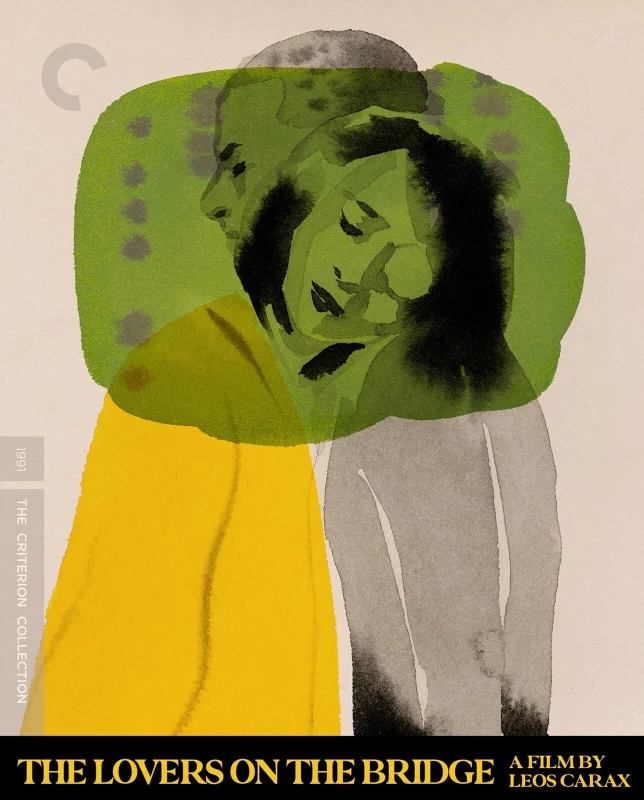
Codec: HEVC / H.265 (91.6 Mb/s)
Resolution: Native 4K (2160p)
HDR: Dolby Vision, HDR10
Aspect ratio: 1.66:1
Original aspect ratio: 1.66:1
#French: FLAC 2.0
#French: DTS-HD Master Audio 5.1
This is the first—and so far the only—film by Leos Carax that I’ve seen. And this isn’t the kind of movie I’d recommend everyone rush out to buy—it sparks such wildly conflicting opinions. There are no glossy visuals, no romance in the traditional sense; it can leave you bewildered by its irrationality, surrealism, and, oddly enough, its sincerity.
But I watched it, and for me, it became one of the best films that shed light on the very essence of love in general. I won’t claim that the film is a masterpiece in and of itself, but it certainly pushes the boundaries of the familiar and forces you to look at this overused and age-old theme from a different angle.
Although at first the film seems quite baffling, strange, and even unpleasant—it portrays the French underworld all too realistically and vividly. It is precisely in this environment, where human virtues and vices are most clearly visible, that a blind and down-and-out artist meets a heavy-drinking, homeless fakir. There is also a third main character in the film, albeit an inanimate one (though how can one say)—the New Bridge itself, which plays almost the same role in the film as Notre-Dame de Paris does in the famous novel: the embodiment of fate itself, which has brought two different lives together. That, in essence, is the entire plot setup. Everything that happens next can also be summed up in just two words—love and fate.
And after a while, you stop asking “why” and “what for,” because such a cohesive and harmonious world, consisting of two people, has been created. Everything is so clear and straightforward that it even surprises me. No, there are no long, profound dialogues or monologues, like a chorus in ancient Greek theater explaining the meaning of this or that plot twist to us. And there are hardly any plot twists to speak of.
But why do we need explanations when we have actors like these—actors we want to believe in? Why do we need additional plot devices that only distract from the main theme? Why do we need all these “whys” when the film is, after all, solely about irrational, instinctive, and fateful love?
And the very production of “The Lovers on the Bridge” also seemed to be hampered by ill fortune—filming dragged on, was repeatedly threatened with cancellation, and the film’s budget ballooned to a fantastical sum, even by today’s standards, Juliette Binoche nearly crashed while water-skiing on the Seine, and Denis Lavant, the lead actor, was injured. Already during filming, Carras came up with the completely crazy idea of shooting the film on a set. So, just outside Paris, bulldozers dug out a pit, filled it with water, and built a scale model of the Pont-Neuf and the surrounding neighborhoods. Add to this the recreation of the 1989 fireworks display over the Seine in honor of the 200th anniversary of the French Revolution, as well as the extremely slow production process—which dragged on for three years due to the director’s perfectionism—and it becomes clear why “The Lovers on the Bridge” is still considered the most expensive and the biggest commercial flop in French cinema history. The project’s producer was ruined financially and died shortly thereafter. The film was finally completed only after the French Ministry of Culture intervened and received mixed reviews from critics.
But the bottom line is a grandiose two-hour spectacle that’s hard to tear yourself away from—poignant, dramatic, heart-wrenching, reaching the very depths of the soul, sincere, and frenzied. It is at once a beautiful fairy tale, a hyperbolized story, and yet a film that is terrifyingly realistic and truthful.
A rare gem of a film. One that leaves you with nothing but sadness that movies like this aren’t made anymore—and, judging by the direction modern cinema is heading, probably never will be.
 Telegram and be the first to know about updates!
 [/xfnotgiven_poster]
 [/xfnotgiven_poster]