Login / Register
Guest
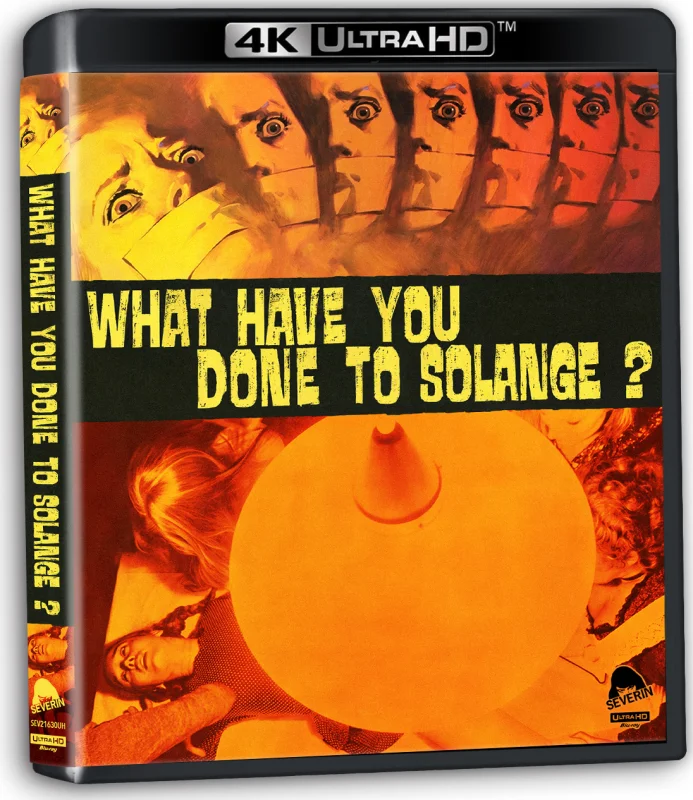
Codec: HEVC / H.265 (72.5 Mb/s)
Resolution: Native 4K (2160p)
HDR: HDR10
Original aspect ratio: 2.39:1
#Italian: FLAC 1.0
#English: FLAC 1.0
A young woman is murdered at a private women’s boarding school. The killer is dressed as a Catholic priest, and the murder itself was committed with particular brutality. It’s safe to assume we’re dealing with a psychopath—after all, he literally “took possession” of the young woman with a knife. However, the murders will continue.
Then the investigation begins. Massimo Dalamano never lets the pace drop, so the film remains engaging and dynamic. Incidentally, the plot takes a very interesting turn—just like in the story about Madame Wadl, the main character has visions of actual murders.
Please pay special attention to the small role of the first girl to be murdered—Solange. She was played by Camille Keaton. This is the very same actress who, a few years later, would become famous in *A Woman’s Day*, directed by her husband, Meir Zarki. After that, her career would enter a long lull.
The film’s director, Massimo Dallamano, gained fame for his cinematography in Sergio Leone’s spaghetti westerns. However, his work as the director of this typical giallo film appears highly professional and serious.
Dallamano truly prioritizes the detective plot over existential flourishes. This is a perfectly justified move, as the film is clearly a success.
I was very pleased with the resolution, which gives the film a meaning worthy of discussion. In particular, the killer’s identity deserves discussion—who is he: a bloodthirsty maniac, a sociopath, or a law-abiding citizen restoring social justice? It’s commendable that Dallamano doesn’t spell out the social subtext—the conclusions suggest themselves.
It remains only to add that Ennio Morricone composed the film’s score. Perhaps every other giallo was made with his musical accompaniment.
 Telegram and be the first to know about updates!
 [/xfnotgiven_poster]