Login / Register
Guest
Codec: HEVC / H265 (48.1 Mb/s)
Resolution: 4K (2160p)
Original aspect ratio: 1.85:1
#Japanese: Dolby TrueHD 7.1
#Japanese: PCM 2.0
#Japanese: Dolby TrueHD 5.1
#Japanese: Dolby TrueHD Atmos 7.1
#English: DTS-HD Master Audio 5.1


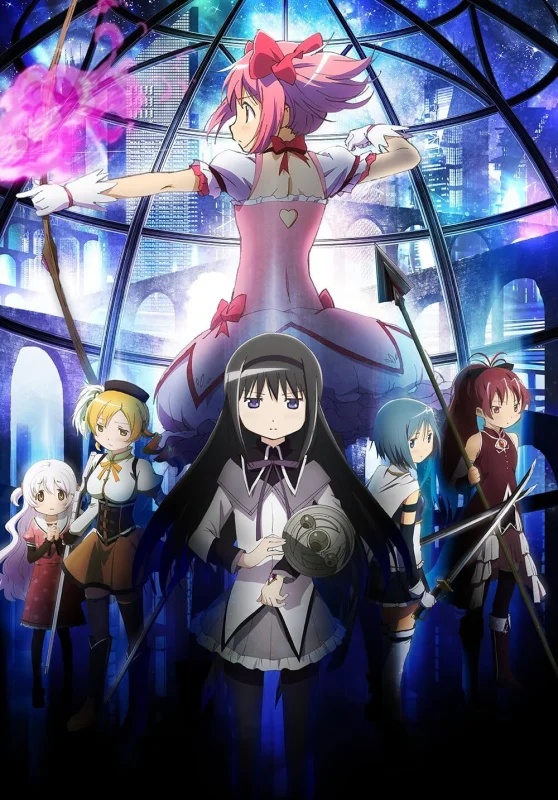
Following the events of the Madoka duology, Madoka rewrote the universe and dissolved into it as the supreme being, the Law of the Cycle. It seems like a happy ending. However, in Rebellion, all the magical girls are together again, happy and fighting in Mitakihara—and this should set viewers on edge from the very beginning. Homura realizes that something is fundamentally wrong.
The first act is deliberately deceptive with its pastel colors, coordinated team battles, and even a musical number. This is SHAFT toying with the audience, lulling them into a false sense of security before delivering the blow. When the illusion shatters, the film transforms into a philosophical thriller about obsession, free will, and the price of love, with Homura serving as the protagonist, antagonist, and victim all at once.
The ending of Rebellion continues to divide the fandom to this day. Having betrayed Madoka’s ideals and rewritten reality out of pure obsession, Homura declares: "I suppose I am what they call a demon." This is not a villainous monologue; it is the logical conclusion of dozens of time loops in which she lost Madoka repeatedly. Whether it's genius or monstrous is up to the viewer to decide.
Visually, the film is the pinnacle of SHAFT, featuring Homura and Mami’s baroque-style battle, a nightmarish transformation sequence, and the final collapse of the universe. This isn't just anime; it's auteur cinema with a feature-length budget.
Verdict: Watch only after completing the series and duology. It's not entertainment—it's a provocation. But it's a provocation of the highest order. 9/10
 Telegram and be the first to know about updates!
 [/xfnotgiven_poster]