Login / Register
Guest
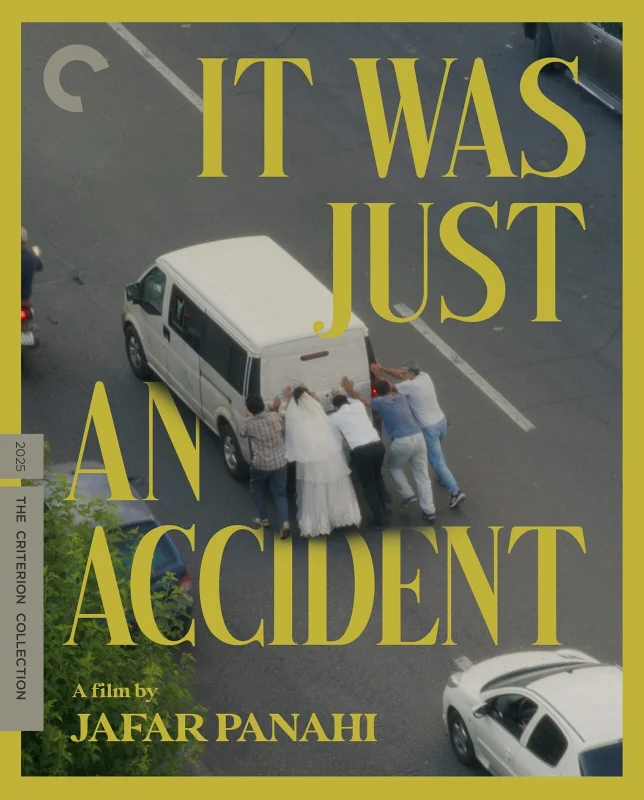
Codec: HEVC / H.265 (92.4 Mb/s)
Resolution: Native 4K (2160p)
Aspect ratio: 1.85:1
Original aspect ratio: 1.85:1
#Persian: DTS-HD Master Audio 5.1 (48kHz, 24-bit)
All the major figures in Iranian cinema were either the stuff of legend or had spent time in prison. The allegorical nature of these stories did not preclude the latter scenario. Jafar Panahi is undoubtedly one of those who knows how to speak plainly. That is why most of his films were shot in secret, against the state’s wishes, and he himself knows firsthand how angry the Ayatollahs’ regime gets
The family returns to Tehran in a car that treacherously breaks down in the middle of the night. A mechanic from some godforsaken shack in the desert offers to help. The Good Samaritan’s assistant suddenly recognizes the creaking of the car owner’s prosthetic leg as that of his tormentor, who once tortured him in one of the regime’s prisons. Moving from surveillance to abduction by morning, the unfortunate avenger Vahid digs a hole and prepares to bury his tormentor alive, but begins to doubt whether he has the right man...
Here, as in every previous story, Panahi acts as an anthropologist of Iranian society. He works with surgical precision, setting up pseudo-documentary cameras on bustling streets and using semi-professional actors. An equally important aspect of his films is Iran in the background. Here is a comedy of manners where every guard begs for a bribe and even has a card payment terminal. It seems to be acted out by the actors, yet it also seems to be simply captured by the director’s camera trap. And then there’s the scene where a pregnant woman is turned away from the hospital because she has no husband or father with her. This is all Iran, which Panahi studies, dissects, pities, but above all, loves
At the heart of the basic story of *Accidents* lies a choice as old as time: justice or mercy. How far are you willing to go to become the very person you seek to avenge, in your attempts to settle the score with them? Panahi is a prominent humanist, so his answer doesn’t really count as a spoiler. In ‘Accidents,’ animals and humans are not separated by a cage; they share a common enclosure. The law of the jungle (in the Iranian case, a rocky desert) is always more compelling than a single act of human empathy, but it is precisely the latter that shines brighter. Panahi weaves his own fate and his relationship with authority into the stories of the film’s characters. He changes the setting but adds depth to the essence.
His character Vahid is also a humanist; he cannot bring himself to be truly angry, hesitating just before the point of no return. In contrast, the antagonist floors the gas pedal even when a stray dog runs out in front of the car. This dualism also stems from folk parables. Although in *The Accidental*, a comedy also shines through—a rare genre for Iranian cinema. After all, driving around the city in a van with a captive is, for example, a bride in a white dress
It’s difficult to draw long-term conclusions from *Accident*. The story remains a private one; Iran is under the rule of the ayatollahs, and Panahi is welcomed with applause only in the world on the other side of the fence. Winning at Cannes is a sign of recognition, but will it bring him back to his homeland? And isn’t the master more in love with people of resistance, struggle, and choice than with the human race itself? Panahi’s path symbolizes hope and faith in all that is good no less than the futility of these battles. Is he a master? Yes. Does he change anything? Doubts
In conclusion, ‘A Simple Coincidence’ is a film for which context will always speak louder than artistic merit. For Panahi, who has won awards from all three major European film festivals, it is a milestone. A triumph of will and courage. If we evaluate the film purely from a cinematic standpoint, however, the Iranian director has produced even stronger works. The truth, in any case, lies where people are not yet doomed. Here, Panahi is radical—everything can be overcome, as long as we do not become those from whom we are fleeing
 Telegram and be the first to know about updates!
 [/xfnotgiven_poster]
 [/xfnotgiven_poster]