Login / Register
Guest
Codec: HEVC / H.265 (87.1 Mb/s)
Resolution: Native 4K (2160p)
HDR: Dolby Vision, HDR10
Aspect ratio: 1.33:1
#Italian: FLAC 2.0
#English: FLAC 1.0
Remember the line from that good old cartoon everyone knows: “Whoever visits in the morning acts wisely”? Well, that certainly doesn’t apply to this mystical thriller, “The Murder Secret.” While many horror films draw on various phobias, this one centers specifically on weekend visits to distant relatives.
First and foremost, it’s worth mentioning that the film couldn’t be simpler. Its foundation consists of the most straightforward plot elements: an ordinary family travels to a remote forest area, settles into a secluded house, and then bloody murders occur one after another. There’s really nothing more to it, except for a twist in the epilogue with a fleeting touch of the mystical—which, all in all, neither elevates nor redeems the story itself. It is these classic elements of the horror genre that should be examined in a bit more detail in order to arrive at an objective assessment.
The family—the film’s main characters—is small, consisting of only five people. The filmmakers had to carefully space them out over the entire runtime. In other words, the actual action and murders don’t unfold until closer to the end of the hour. Until then, the viewer watches purely ordinary daily life, brief narrative flashbacks to the protagonist’s childhood, and subtle hints of the supernatural. The latter aspect, by the way, is clumsily executed (a sleepwalking boy simply stands in front of a turned-on TV, for example) and was clearly added just to fill in the gaps in the script. In general, these “gaps” are quite significant, and they are offset by a bit of nudity involving the heroine’s daughter, who is sometimes seen casually changing clothes in front of the camera and other times walking into the bathroom. As a result, the viewer immediately realizes the director’s (Mario Bianchi, who, by the way, also wrote the screenplay) inability to deliver an engaging spectacle every minute, which is why the plot drags very often.
As for the climax, it does feature a series of planned character deaths (in an attempt to at least somewhat shake up the drawn-out plot), but they’re very rushed and disjointed, leaving no time to build suspense, and suddenly, within about ten minutes, a whole bunch of characters will die without evoking even a shred of tense empathy during a chase that was never meant to happen in the first place. These scenes resemble a fast-paced slasher film, but the problem for fans of the genre is the minimal number of characters involved—saved “for the best” and then immediately squandered in the rush. The scenes are varied and explicit, though one shamelessly copies the famous shower scene from *Psycho* in excruciating detail—but in a much more blood-soaked version.
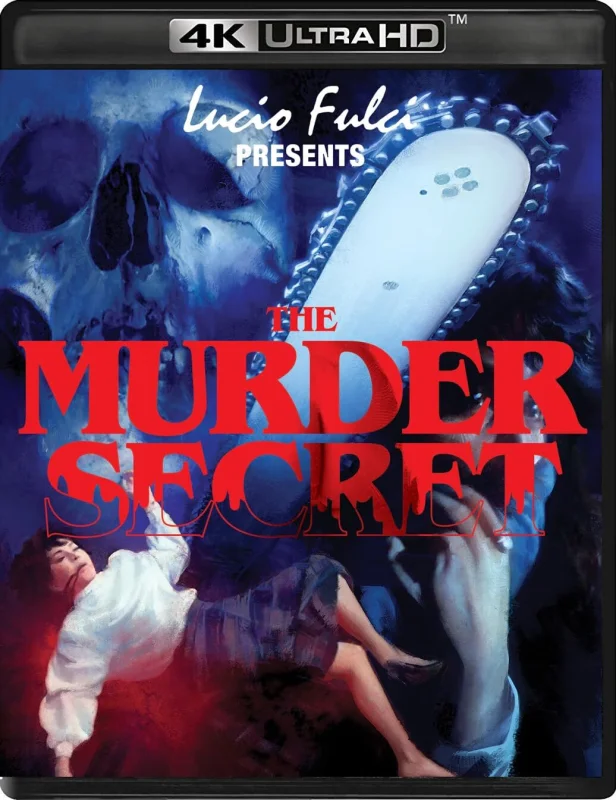
Speaking of these brutal on-screen moments (which, in any case, are thrust to the forefront in the flimsy, one-dimensional narrative), one can’t help but think of the figure of Italian horror director Lucio Fulci. The fact is, the film was released under the marketing banner “Lucio Fulci Presents,” where Fulci bears no responsibility whatsoever—he’s merely there to promote the recognizable brand on the packaging and in the credits, which director Bianchi imitates as best he can with all the vivid colors and… scattered, crawling larvae. Furthermore, the viewing experience will prove predictable if viewers have already seen *A Nightmare Concert* (*Un gatto nel cervello*) by the same old Fulci, since he incorporated all the key scenes from this horror film into his own creation.
The finale will finally resolve the plot twist—predictable almost from the very beginning—reveal the killer, and lead into… a clumsy action sequence! Right at the climax, the director suddenly throws in a full-blown action-fight scene that goes on for quite a few minutes! But this isn’t a well-choreographed fight sequence like the one in *Way of the Dragon* with Bruce Lee and Chuck Norris; rather, it’s a drawn-out, clumsy scuffle involving older actors that looks, at best, ridiculous, and at worst, tedious. And it’s even more detached from the theme of the maniac and his victim. Of course, they try to cloak some of it in mysticism, but the ending still feels just as chaotic as everything that came before.
Ultimately, the film “The Murder Secret,” directed and written by Mario Bianchi, is a mediocre spectacle—not particularly engaging in terms of its premise or execution—and feels predictable from start to finish. Moreover, aside from the issues mentioned above, it’s shot in an amateurish manner in terms of lighting—or rather, the lack thereof—so in all the night scenes, the viewer can barely see what’s happening on screen due to the use of only natural light sources. Upon proper consideration, this film deserves no higher rating than a “C.” The only successful elements are the imitations of Fulci’s horror techniques; otherwise, there is nothing memorable. That said, it might strike some inexperienced viewers as a decent horror film about a mysterious serial killer and a deceived family in a remote forest, but for those who’ve seen their fair share of the genre, watching it won’t hold much appeal—after all, the more you watch, the higher your expectations become.
 Telegram and be the first to know about updates!