Login / Register
Guest
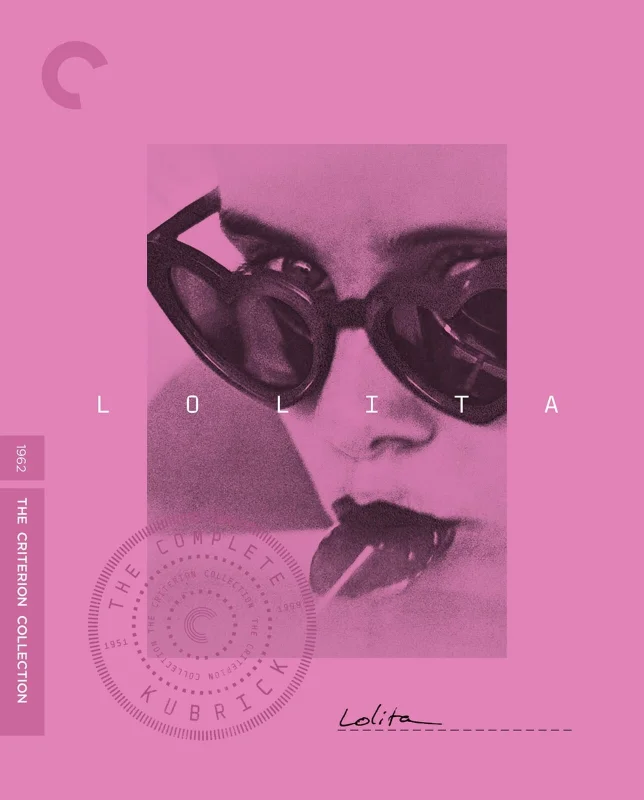
Codec: HEVC / H.265 (79.2 Mb/s)
Resolution: Native 4K (2160p)
HDR: Dolby Vision, HDR10
Aspect ratio: 1.66:1
Original aspect ratio: 1.85:1
#English: FLAC 1.0
#French: Dolby Digital 1.0
#German: Dolby Digital 1.0
#Italian: Dolby Digital 1.0
#Spanish (Latino): Dolby Digital 1.0
#Spanish: Dolby Digital 1.0
#Portuguese: Dolby Digital 1.0
Apparently, there are some books that are simply not meant to be made into movies...
...history shows that this can be said of “The Picture of Dorian Gray,” the works of Vonnegut and William Burroughs, and, apparently, “Lolita.”
It would seem that Stanley Kubrick took on the project and even enlisted Nabokov himself to write the screenplay, but it still didn’t turn out right.
First and foremost, Lolita. No, it’s understandable—you can’t show a 12-year-old girl in all the scenes described in the novel; no censorship board would allow it. But if you don’t do that, the movie loses its meaning. As a result, in both this film and the 1997 version, the actress playing the lead role turns out to be older. Yet she’s playing exactly what’s written in the novel—that is, a 12-year-old girl. As a result, in my opinion, in both films Lolita comes across as a mentally disabled girl stuck in puberty. And that’s the main drawback. That’s precisely why the book is obviously not meant to be adapted into a film, since everyone understands that you can’t cast a 12-year-old in that role.
Humberto didn’t work out either. He doesn’t come across as a refined intellectual with all the inner turmoil depicted in the novel.
The only successful character is Lolita’s mother. Yes, yes, yes! That’s exactly as in the novel.
Actually, “Lolita” as a literary work, in my opinion, has another strong point. It’s the writing style, the prose. The novel is written in incredibly beautiful language; it’s simply mesmerizing. The film, I’m sorry to say, is flat.
 Telegram and be the first to know about updates!