Login / Register
Guest
Codec: HEVC / H.265 (69.9 Mb/s)
Resolution: 4K (2160p)
Aspect ratio: 1.78:1
Original aspect ratio: 1.66:1
#Italian: FLAC 1.0
#English: FLAC 1.0
#German: LPCM 2.0 (48kHz, 16-bit)
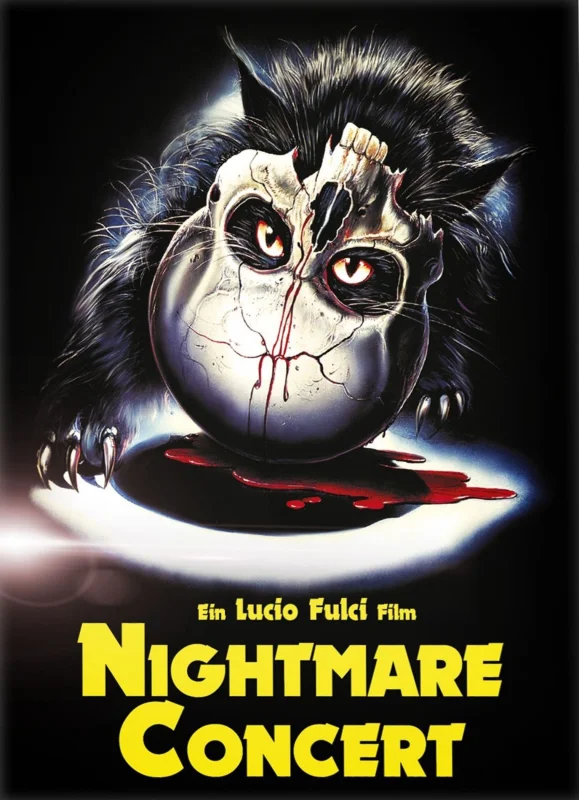
Before watching the movie, I read some reviews and figured out what the film was all about. However, watching it took me by surprise.
I expected the film to be more polished—there are too many clips from other movies spliced in. But at the same time, I didn’t even expect the film to be this original.
To put it bluntly, the film was essentially thrown together on the fly; the details aren’t worked out at all. However, it’s precisely this fact that gives the film its charm. After all, the focus here is on realism. And what could be more realistic than a famous horror film director whom the villain is trying to use as a “stand-in maniac”?
At the same time, watching the real-life director gradually lose his mind makes you can’t help but reflect on the complexities of his profession.
And of course, once again, Fulci makes references to Edgar Allan Poe’s “The Black Cat.” And since the reference is to Poe, it’s quite likely that the director doesn’t rule out an ambiguous interpretation. Perhaps no one is pushing the director to commit murder—except his own imagination.
As I’ve already said, the film’s main sequences are borrowings from other well-known horror movies. They seem to come to life—whether in reality or in Fulci’s distorted mind.
I should note that the film’s low budget is very noticeable. Moreover, I’m sure that far less than the stated budget of $100,000 was actually spent. Fulci’s boldness and precision command my respect, and the film itself deserves recognition. And it’s definitely worth watching again—after all, despite all its superficial flaws, you can sense the Master’s direct dialogue with the audience.
 Telegram and be the first to know about updates!