Login / Register
Guest
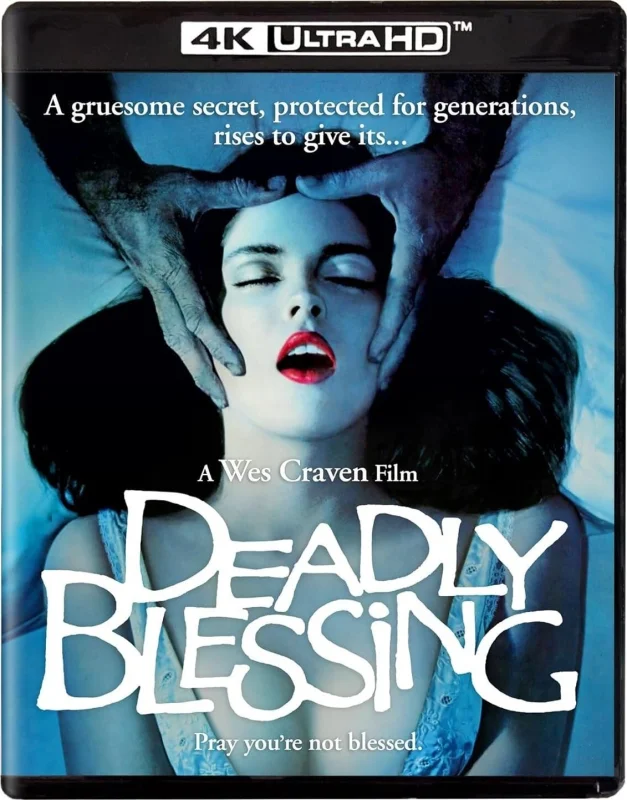
Codec: HEVC / H.265 (95.5 Mb/s)
Resolution: Native 4K (2160p)
HDR: Dolby Vision, HDR10
Aspect ratio: 1.85:1
Original aspect ratio: 1.85:1
#English: DTS-HD Master Audio 1.0
#English: DTS-HD Master Audio 5.1
#English: FLAC 2.0 (Commentary by director Wes Craven and host Sean Clark)
#English: Dolby Digital 2.0 (Commentary by film historians Troy Howarth and Eugenio Ercolani)
That’s exactly how I’d describe my impressions of the movie. I simply enjoyed it—no more, no less. I love movies like this—ones that don’t try to be anything they’re not, and are all the more enjoyable for it. They’re great to watch on TV in the evening; you can turn it off at any moment or do whatever you want, using the movie as background noise and glancing at the screen from time to time. Although you can—and maybe even should—set aside some dedicated time for it as well.
This is the fourth (not counting the documentary “The Evolution of Snuff,” which had two other directors) feature-length film by Wes Craven, one of the best contemporary directors in the horror genre (and not just horror). And this is his first major studio production (according to official data, the budgets for his previous works never exceeded $230,000).
First and foremost, it’s the technical aspects of the film that are particularly impressive. There’s none of the trashy production style seen in "The Last House on the Left" and "The Hills Have Eyes"; here, everything is much more Hollywood-style. For me, this wasn’t a huge plus, but most people will find the film more enjoyable to watch (after all, watching his early works requires a certain mindset). Overall, it’s quite intimate; most of the action takes place in a single house. On the other hand, the special effects aren’t half bad—they look old-school but are realistic. I didn’t notice any particularly graphic gore; maybe I’m just used to it, but it didn’t make me feel queasy—though the spider in the mouth did take me by surprise.
The movie isn’t boring to watch, though I didn’t feel particularly drawn to the screen. But it all ends surprisingly quickly—it’s a fast-paced little film that doesn’t drag on at all. What’s surprising is that it’s actually scary in places. Although it’s hard to pin it down to any specific genre—it’s part horror, part thriller, part mystery, and at times even a melodrama—these elements blend together perfectly, creating an unusual atmosphere.
The plot is fairly simple, a bit clichéd, though it does pique your interest; however, it lacks unexpected twists. There’s a welcome dose of self-irony; in fact, the film can be seen as a direct jab at religion, and this impression is particularly reinforced by the fact that Craven himself grew up in a very religious family yet didn’t really share their views. It’ll also be a lot of fun for fans of “A Nightmare on Elm Street” to watch; it’s clear that he borrowed many ideas from that film (think of the bathroom scene and the cool ending).
I also have to say a few words about the cast. First and foremost, I was impressed by Maren Jensen, an actress I hadn’t heard of before, who played the lead role very well.
And, of course, the young Sharon Stone (she was 23 at the time), for whom this role was her first notable one in a feature film. I also really liked and was scared by Ernest Borgnine—a colorful actor. Michael Berryman left a lasting impression on me.
 Telegram and be the first to know about updates!
 [/xfnotgiven_poster]