Login / Register
Guest
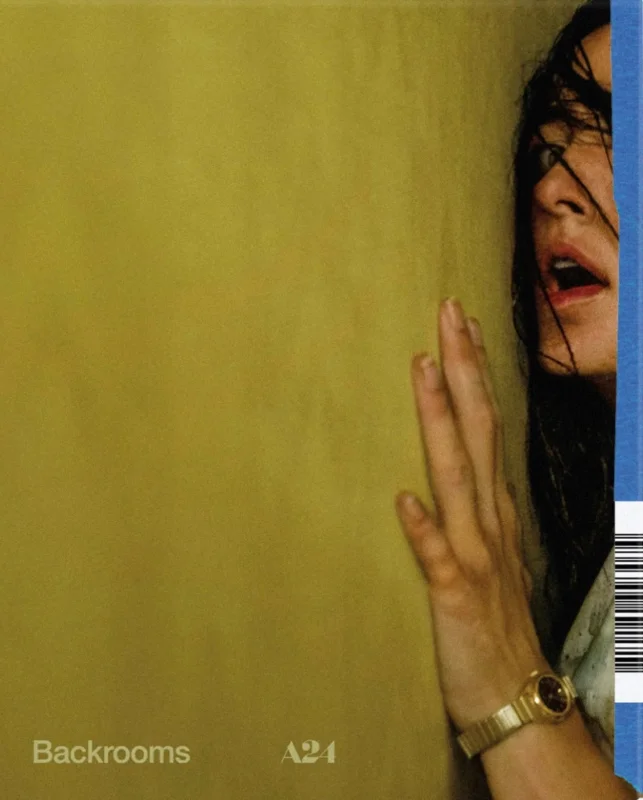
Codec: HEVC / H.265 (84.3 Mb/s)
Resolution: Native 4K (2160p)
HDR: Dolby Vision, HDR10+
Aspect ratio: 1.85:1
Original aspect ratio: 1.85:1
#English: DTS-HD Master Audio 5.1
#French: DTS-HD Master Audio 5.1
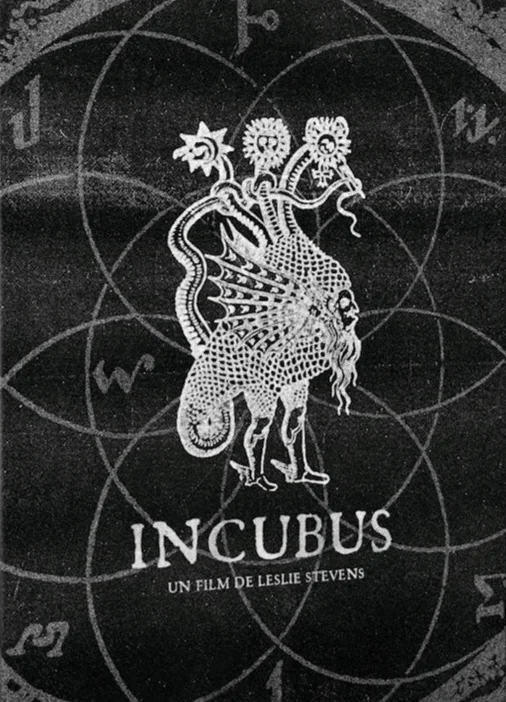
After watching the entire movie, I still couldn’t answer the main question: what on earth was that?
And it’s not that I wasn’t paying attention. The thing is, toward the end, the movie starts bombarding the viewer with such a flood of disjointed details—hints about an organization studying the origins of the Backrums; fragments of flashbacks whose connections to specific characters remain unclear; objects and symbols that recur throughout the film without any explanation—that it’s honestly impossible to piece it all together into a coherent whole. I can speculate about what the director wanted to say regarding inherited trauma, alter egos, or space as a cast of someone else’s psyche—but these would be just speculations, not what the film actually made clear. Perhaps I missed connections that were supposed to explain everything. Or perhaps there really wasn’t a cohesive concept to begin with, and the jumble isn’t due to my inattention but rather a feature of the screenplay.
And that is the main problem: a good film, even a complex and unhurried one, gives the viewer the sense that all the details work toward a single idea, even if it doesn’t state it explicitly. Here, however, toward the end, the exact opposite feeling arises—that there are more and more elements, but fewer and fewer connections between them. A narrative structure emerges—and immediately vanishes, leaving no answers. Flashbacks appear—and it’s unclear whose they are or why they’re there. Symbols (a handprint, recurring objects) pop up several times but are never explained.
The characters suffer from the same problem. The supporting characters—the protagonist’s colleagues—are, for some reason, portrayed as more vivid and well-defined than he is, even though half the runtime is devoted to him. The dialogues with the psychotherapist—which were supposed to be the emotional core of the story—drown in clichés, and in the end, we know little more about the protagonist than we did at the beginning.
Visually, the film is well-made: the atmosphere, the sound, and the setting itself all look convincing and unsettling. But a beautiful form isn’t enough when the content is a collection of several potentially interesting ideas that never quite coalesced into a coherent story. I’m not sure the filmmakers themselves knew exactly what they wanted to say—and if they did, they forgot to convey it to the audience.
 Telegram and be the first to know about updates!
 [/xfnotgiven_poster]