Login / Register
Guest
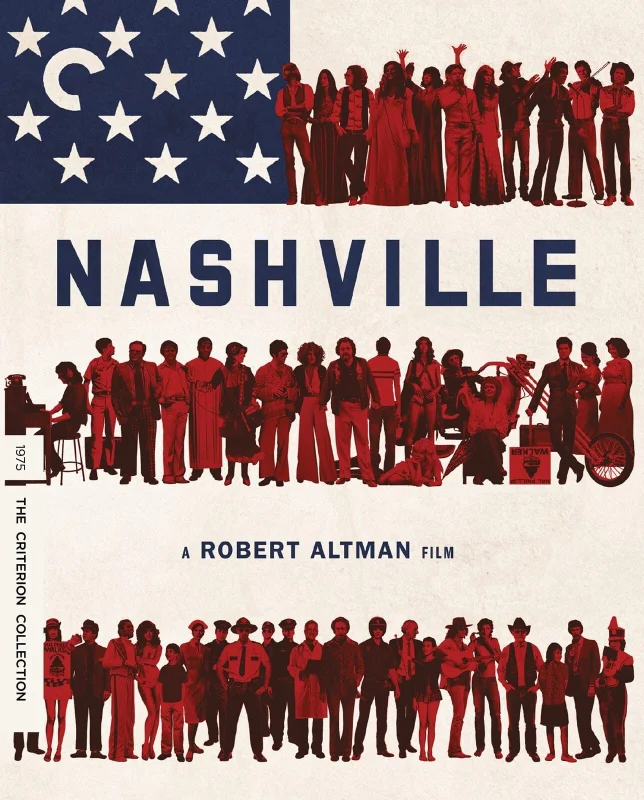
Codec: HEVC / H.265 (71.3 Mb/s)
Resolution: Native 4K (2160p)
HDR: Dolby Vision, HDR10
Aspect ratio: 2.35:1
Original aspect ratio: 2.39:1
#English: DTS-HD Master Audio 5.1 (48kHz, 24-bit)
#English: Dolby Digital 2.0 (Commentary by director/producer Robert Altman)
There’s one big, compelling, and undeniable reason why you should watch this movie (in fact, that’s exactly why I watched it): it’s one of the first films without a single main character, where the fates of numerous characters intertwine on screen (it’s no wonder that *Nashville* is listed on the U.S. National Film Registry).
People like Robert Altman are called upon to pull cinema out of the quagmire of a creative crisis with new ideas and concepts, and Altman did this time and again—particularly with this film. After this film, Altman would go on to direct *Short Cuts*, and then the rest would follow suit.
Now, about the film itself. We have a large number of characters here, and we needed a way to get to know them. The director decided to go all out and staged a car accident, which brought all of Nashville (and beyond) together in one place. The dialog begins, and by the time the chaos subsides, we’re already familiar with all the characters.
There’s a lot of music in the film, and in particular, a lot of country music. So, if you’re not particularly fond of this genre, you might get bored while watching. There were two songs I really liked—“I’m Easy” (which won an Oscar for Best Original Song) and “It Don’t Worry Me,” both written by Keith Carradine.
I should also mention that even though the actors portrayed their characters with the utmost precision (there are many strong performances in the film), the issues in their relationships weren’t well explored—there was very little conflict (in fact, almost none at all). For me, that’s a major drawback.
In the closing scene, Altman once again brings his characters together at a concert in honor of presidential candidate Hall Philip Walker. We already see the “Personalities” in the crowd and on stage, which means the director has achieved his goal. And finally, the song “It Don’t Worry Me,” performed by Barbara Harris, plays. This is the climax and the most powerful moment of the film.
 Telegram and be the first to know about updates!