Login / Register
Guest
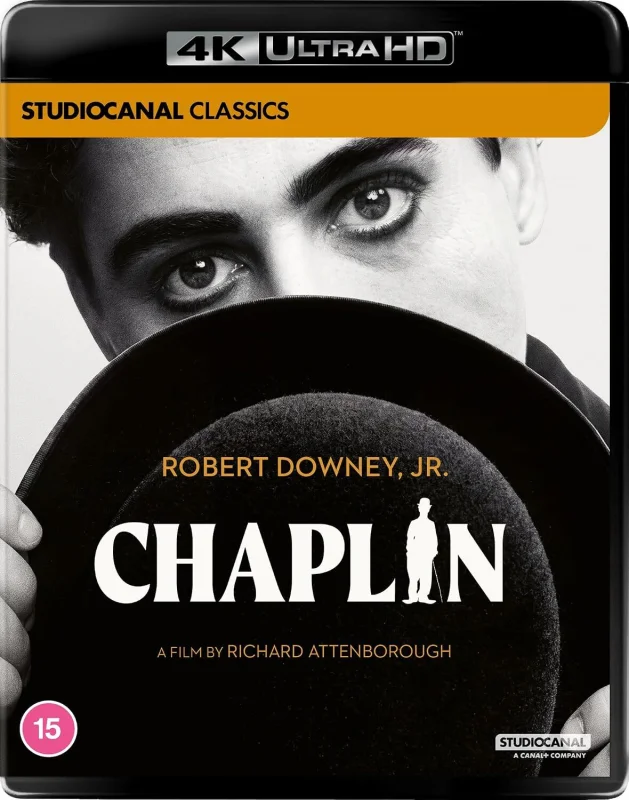
Codec: HEVC / H.265 (52.2 Mb/s)
Resolution: Native 4K (2160p)
HDR: Dolby Vision, HDR10
Aspect ratio: 1.85:1
Original aspect ratio: 1.85:1
#English: FLAC 2.0
#German: LPCM 2.0
#French: LPCM 2.0
A biopic is a unique genre that requires subtlety and sensitivity to avoid dragging on or losing momentum. After all, life—even for famous people—is a fairly ordinary, routine process; it isn’t filled with fireworks or bursting with adventure… even if you’re Charlie Chaplin.
To be honest, though, that’s exactly what I missed in this film: Chaplin himself. No, no—Robert Downey Jr. is natural and convincing within the constraints of his role, but… those constraints are too narrow. Realizing that Chaplin’s name is associated with humor and fun, the filmmakers got confused about what exactly they were making—a comedy or a drama. As a result, they mixed genres and… it backfired. The story lost its coherence; certain scenes seem to fall out of context.
Inserts from Chaplin’s real-life filmography also weigh down the plot. At the same time, the “modern” part fails to emphasize the connections between his life and work: the scene depicting the “birth” of the Tramp is lackluster, as if the dance with the buns appears out of nowhere...
And the ending of this cinematic story, unfortunately, is muddled. The screenwriters’ love for happy endings (especially when they show America acknowledging its mistakes) “forced” Chaplin, standing on the stage of the Kodak Theatre, to watch clips from his films flash across the giant screen, even though the essence of the plot lies in a line he spoke just moments earlier: “All my life I wanted to say something, to change something in life, but I just made people laugh.” There it is—the crux of the matter; there it is—this man’s greatest tragedy.
But, alas, even years later, in the era of sound and even color cinema—even through the lips of another actor—Charles Spencer Chaplin was still never allowed to say a word...
 Telegram and be the first to know about updates!