Login / Register
Guest
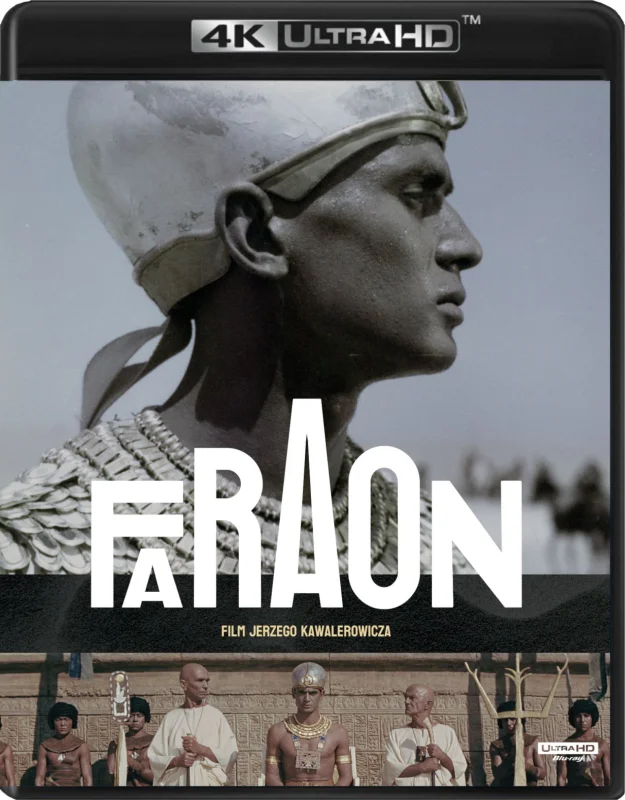
Codec: HEVC / H.265 (65.0 Mb/s)
Resolution: Native 4K (2160p)
Original aspect ratio: 2.35:1
#Polish: DTS-HD Master Audio 5.1
#Polish: FLAC 1.0
#Czech: Dolby Digital 2.0
It is unfortunate that, as a student in the history department at Dal State University, I skipped lectures on Oriental studies. Not that it would have shed more light on the historical context of events (even if they are fictional), but it would have provided a clearer understanding of the material. Before watching the film, I was already in a positive mood. Firstly, director Jerzy Kawalerowicz, with only two films under his belt, The Train (1959) and Mother Joan of the Angels (1960), I can safely say, including this film in the list, that the maestro improved from film to film. He set and conquered ever higher and deeper standards in his creative potential. Secondly, Polish cinema in the second half of the 1960s was just gaining momentum, entering the golden age of domestic cinema. Wajda shot Ashes (the Hollywood fashion for the peplum genre had probably reached Eastern Europe; in the USSR, in the same year, 1965, Bondarchuk shot War and Peace), Wojciech Has shot The Saragossa Manuscript, which, you must agree, are iconic films for Polish cinema.
The story is as old as the world itself, and it remains relevant today. If you look closely at the political realities, you can surely find similar characters. The bone of contention is power, and the more comprehensive it is, the more desirable it is, and the more capable of great meanness and cunning is the person who strives for it. The characters in the film cannot get along in the great state; each considers himself the rightful owner, not only of the land and the people, but also of the will of the gods (I am referring to the magnificent episode where the priest smokes a glass pipe and how it is connected with the invocation of Osiris). The clashes between the future Pharaoh and the holy men begin in the first minutes of the film. Ramses XIII is forced to lead his army around, through a canal, so as not to block the path of two beetles rolling a ball of dung. As a result, an innocent man is killed, and, more importantly, the honor of the young prince is trampled upon. Now he is filled with hatred for the religious caste and, most importantly, craves absolute power. Kavalerovich presents the characters in such a way that there is no line between good and evil; both opponents in the battle for the throne are bloodthirsty and unapproachable. Neither of them evokes sympathy or support. I really liked several scenes in the film. For example, the main character's boat trip, the moment when he makes a wish and shoots arrows, saying, “If I hit the target, my wish will come true.” Or when the priests accompany the Pharaoh through the labyrinth to the treasury. I liked the young Jerzy Zelnik, who made his acting debut (his first role, but already so complex and important) and gave a commendable performance, especially in the episode where he receives tragic news. The female cast members delighted with their beauty. Barbara Brylska and Krystyna Mikołajewska sparkled like jewels in this film. Jerzy Kawalerowicz managed to convey, through his cinematic style, emotions similar to those we experience when reading a book, or rather, when we are engrossed in reading.
Watching “Pharaoh” opened up another wonderful picture in my knowledge of Polish cinema. It is filled with a wonderful spirit of historicism, not pompous and glossy, as is often the case in Hollywood, but realistic, full of life, pulsating with blood and beating like the hearts of millions of Egyptians. Recommended for viewing.
 Telegram and be the first to know about updates!
 [/xfnotgiven_poster]