Login / Register
Guest
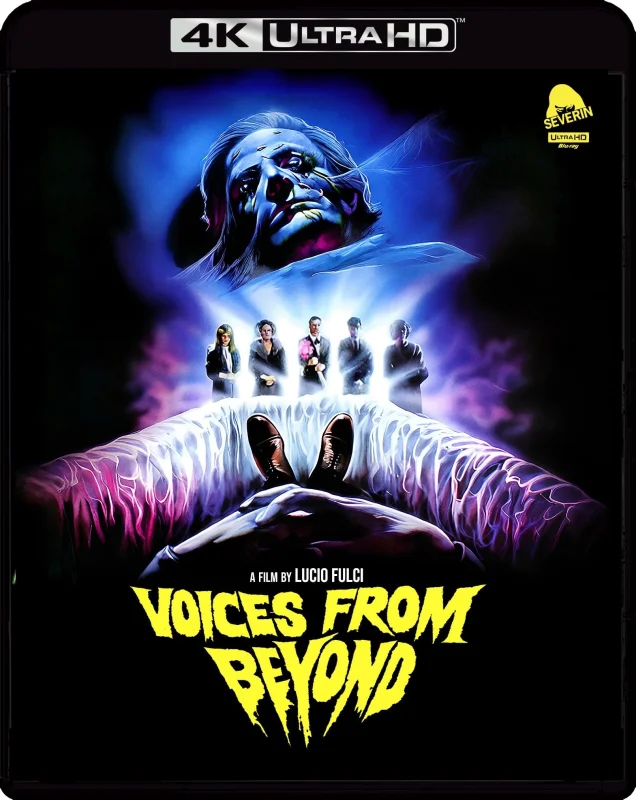
Codec: HEVC / H.265 (86.6 Mb/s)
Resolution: Native 4K (2160p)
HDR: HDR10
Original aspect ratio: 1.85:1
#Italian: FLAC 1.0
#Italian: DTS-HD Master Audio 2.0
#English: FLAC 1.0
#English: DTS-HD Master Audio 2.0
Toward the end of his career, Lucio Fulci reflected on death and our time here on earth. What mark will we leave behind? And how can we come to terms with the fact that we are not eternal?
That is why the master’s last two films are imbued not so much with a gloomy atmosphere as with nostalgia for a life that has passed or is slipping away. The protagonist of "Voices from Beyond", like the protagonist of "The Gates of Silence", also cannot come to terms with his own death. He suspects that someone killed him and wants to know who. His daughter—the only one among all his relatives who still harbors warm feelings for him—helps him in this quest.
In this film, Fulchi once again proves that he is capable of directing more than just horror. He succeeds in conveying the oppressive atmosphere of a large family where everyone is interested only in money. Although the protagonist was by no means a saint, but rather just as greedy and cruel a man.
And yet, even toward such an immoral character, the director treats him with sympathy, since no one deserves the fate of losing their life prematurely. Besides, it’s hard to come to terms with the transition to the afterlife. And does it even exist?
Lucio Fulci was a Catholic, though his religious views did not always align with the catechism. Fulci had doubts, and he brought those doubts to life on screen. “A person lives as long as they are remembered”—this idea runs through his entire film. And the protagonist seems to live not in the afterlife, but in his daughter’s memory, because no one else wants to remember him. And so we remember Lucio Fulci, even though he has been gone for many years. We remember him not only because he made good horror films, but also because he was a true artist who expressed his thoughts and feelings through films of various genres. As for his last two films, many will find them boring. Almost nothing happens in them, and the plot is barely sketched out. But for those who can grasp the film’s mood—for those who at least occasionally think about death and their own lives here—these films will be a wonderful gift. “No man is an island,” wrote John Donne, and Lucio Fulci, in his latest films, reminds us that human life is not eternal. In the end, everyone will find themselves at the gates of silence or become a voice from beyond.
 Telegram and be the first to know about updates!