Login / Register
Guest
Codec: HEVC / H.265 (81.0 Mb/s)
Resolution: Native 4K (2160p)
HDR: Dolby Vision, HDR10
Aspect ratio: 1.78:1
Original aspect ratio: 1.85:1
#French: FLAC 2.0
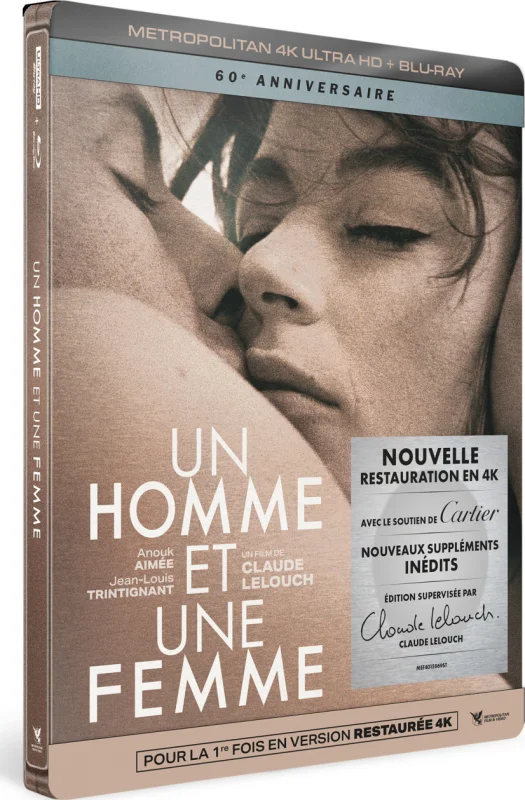
Claude Lelouch admires his characters, ensuring that the audience feels the same way. He has created a truly humanistic film in which love is free from irony and commercialism. As the title suggests, the film is built around the interplay between two characters—and both he and she gave outstanding performances. This may well have been Jean-Louis Trintignant’s best role.
From the perspective of a film buff accustomed to the music-video style of Hollywood directors, the action unfolds very smoothly and unhurriedly. However, it can by no means be called drawn-out—on the contrary, you find yourself wishing it wouldn’t end. The film is imbued with warmth, light, French elegance, and a certain homey coziness. The encounters, dialogues, and emotional moments feel natural, soulful, and touching. Every detail is in its right place and lends meaning to what we see. For example, a limping man walking his dog—which is also limping—along the seashore.
Lelouch masterfully used black-and-white documentary-style footage amidst the “color” scenes. The car races, especially those on the track, were filmed beautifully, although by design, the technical aspects of the film were meant to—and do—take a back seat.
The music from this film has long since become a classic, and it’s unlikely that anyone hasn’t heard it.
While watching, one can’t help but feel that many of the director’s innovations were later used by others in numerous other films—including some very good ones—but Lelouch was the first.
What has happened in the forty years since this film? Have the actors and directors passed away? Has the era changed? In any case, unfortunately, films like this are hardly ever made anymore. C’est la vie.
 Telegram and be the first to know about updates!